Two Famous Biryanis, One Common Confusion
If you have ever stood in front of a menu and wondered whether to order the Hyderabadi biryani or the Mughlai biryani, you are not alone. Both are layered, aromatic and royal in origin. But they come from very different culinary traditions, and once you know the differences, you will recognize them in the first bite.
This guide breaks down exactly what separates them — origin, technique, spice, taste — and why both deserve a place in your dining rotation.
A Quick Origin Story
Mughlai biryani is the older of the two. It evolved in the royal kitchens of the Mughal emperors from the 16th century onwards, blending Persian, Central Asian and North Indian techniques. Think of it as the original blueprint — rich, creamy, slow-cooked, designed to feed kings.
Hyderabadi biryani is its more fiery, more regional cousin. When the Mughal influence reached the Deccan plateau and met the bold spice culture of southern India, a new style was born — sharper, spicier, with a distinct cooking method called kacchi yakhni. It became the signature dish of the Nizams of Hyderabad.
So yes, Hyderabadi biryani is technically descended from Mughlai biryani — but the two have drifted far enough apart that they are now distinct cuisines.
The Cooking Method: Pakki vs Kacchi
This is the single biggest technical difference between the two.
Mughlai Biryani — Pakki ("Cooked")
In Mughlai biryani, the meat is fully cooked first in a rich gravy of yogurt, fried onions, ground spices and dry fruits. Separately, the basmati rice is par-boiled with whole spices. The cooked meat and partially-cooked rice are then layered together in a heavy-bottomed pot, sealed with dough, and finished on dum (slow steam).
Because the meat is already cooked, the dum stage is shorter and gentler. The result is a biryani where the gravy has clearly soaked into the rice, the meat is tender and uniform, and the overall flavour is rounded, mellow and rich.
Hyderabadi Biryani — Kacchi ("Raw")
In Hyderabadi biryani, the meat is marinated overnight but not pre-cooked. Raw, marinated meat is layered directly with par-boiled rice in the pot, sealed, and cooked on dum for much longer — long enough for the meat to cook from raw to perfect, in its own juices, while the rice absorbs every drop.
This is harder to get right. The risks are real — undercooked meat or overcooked rice — but when it works, the result is unmistakable. Sharper meat flavour, distinct rice grains, and that signature aggressive aroma the moment the dough seal is broken.
The Spice and Flavour Profile
| Aspect | Mughlai | Hyderabadi |
|---|---|---|
| Heat level | Mild to medium | Medium to high |
| Dominant flavour | Yogurt, cream, fried onions, dry fruits | Green chili, mint, coriander, lemon |
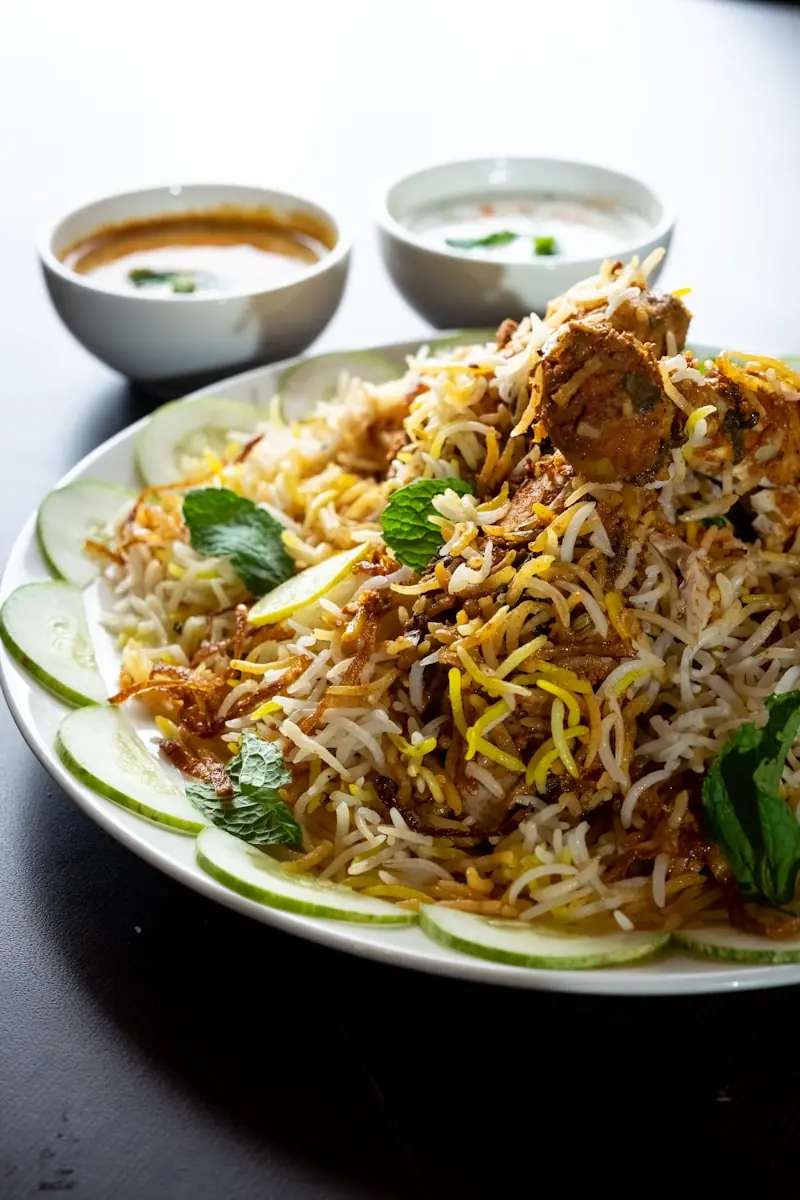
| Colour | Pale gold to brown, even | Vibrant patches of yellow (saffron), orange (mirchi), white |
| Texture | Slightly moist, gravy-soaked | Drier, distinct grains, oilier in spots |
Mughlai biryani leans on richness — yogurt, cream, dry fruits, ghee, fragrant whole spices. Hyderabadi biryani leans on boldness — green chilies, mint, fresh coriander, a clear hit of lemon and a much stronger spice presence.
What About The Rice and Garnish?
Both use long-grained basmati rice. Both layer rice and meat. Both use fried onions (birista) and saffron-infused milk. The differences:
- Mughlai biryani often includes dry fruits — almonds, cashews, raisins — adding a subtle sweetness
- Hyderabadi biryani uses fresh herbs aggressively — generous mint and coriander between layers, plus lemon juice
- Mughlai biryani is typically served with raita alone; Hyderabadi biryani is traditionally served with mirchi ka salan (a tangy chili-peanut gravy) and raita
So Which One Should You Order?
There is no winner — they are designed for different moods.
- Choose Mughlai biryani when you want comfort: rich, mellow, aromatic, slightly sweet, royal in the most indulgent sense
- Choose Hyderabadi biryani when you want intensity: sharp, spicy, herby, a flavour that wakes you up
At Mughlai Magic, our Chicken Biryani and Mutton Biryani are made in the authentic Mughlai tradition — pakki style, slow-dum cooked, mineral water, Himalayan basmati rice. If that sounds like your kind of biryani, order online or visit us at The Skyview 10, Hitech City Main Rd, Hyderabad.
Try Both, Decide For Yourself
The best way to settle this debate is to taste both, ideally back to back. Order a Mughlai biryani from us this week, and a Hyderabadi biryani from a Hyderabadi specialist next week. Notice the colour, the aroma, the heat, the rice texture. By the third bite, you will not need anyone to explain the difference.